What is a Ceramic Coating? The Ultimate Simplified Guide. Free Download Below.
Download the free ceramic coating quick guide
What Is a Ceramic Coating?
A ceramic coating sits on top of your paint (or clear coat) as a bonded layer that helps your finish look better and stay easier to care for over time.
What you usually notice in day-to-day use:
Paint protection: added resistance to light chemical staining and environmental fallout
Gloss enhancement: a clearer, deeper shine that makes paint look “fresh” longer
Easier maintenance: dirt and grime release faster with proper wash methods
Hydrophobic behavior: water beads and sheets off, which helps reduce water spotting risk when dried properly
Long-term appearance: consistent look between washes because the surface stays smoother and cleaner
How Ceramic Coatings Work A coating bonds to the surface after proper preparation. This creates a more uniform, slick top layer than bare clear coat, so contaminants have a harder time sticking.
Because dirt grips less, washes typically take less time and you can use gentler contact. You still need good wash habits and regular drying. The coating helps you maintain results, it does not replace maintenance.
Professional prep matters because the coating locks in what’s underneath. A clean, decontaminated, and corrected surface helps the coating bond evenly and look its best.
Realistic expectations A ceramic coating can reduce maintenance and improve gloss, but it will not prevent rock chips, stop scratches from poor washing, or fix existing paint defects.
Easier washing (two-bucket method helps more)
Improved gloss and clarity
Easier bug and dirt removal
Reduced need for waxing
Long-term appearance protection
Hydrophobic behavior (beading and sheeting)
Ceramic Coating vs Wax + Myths
Ceramic vs Wax
Realistic lifespan
Myth: stops all scratches
Myth: no maintenance needed
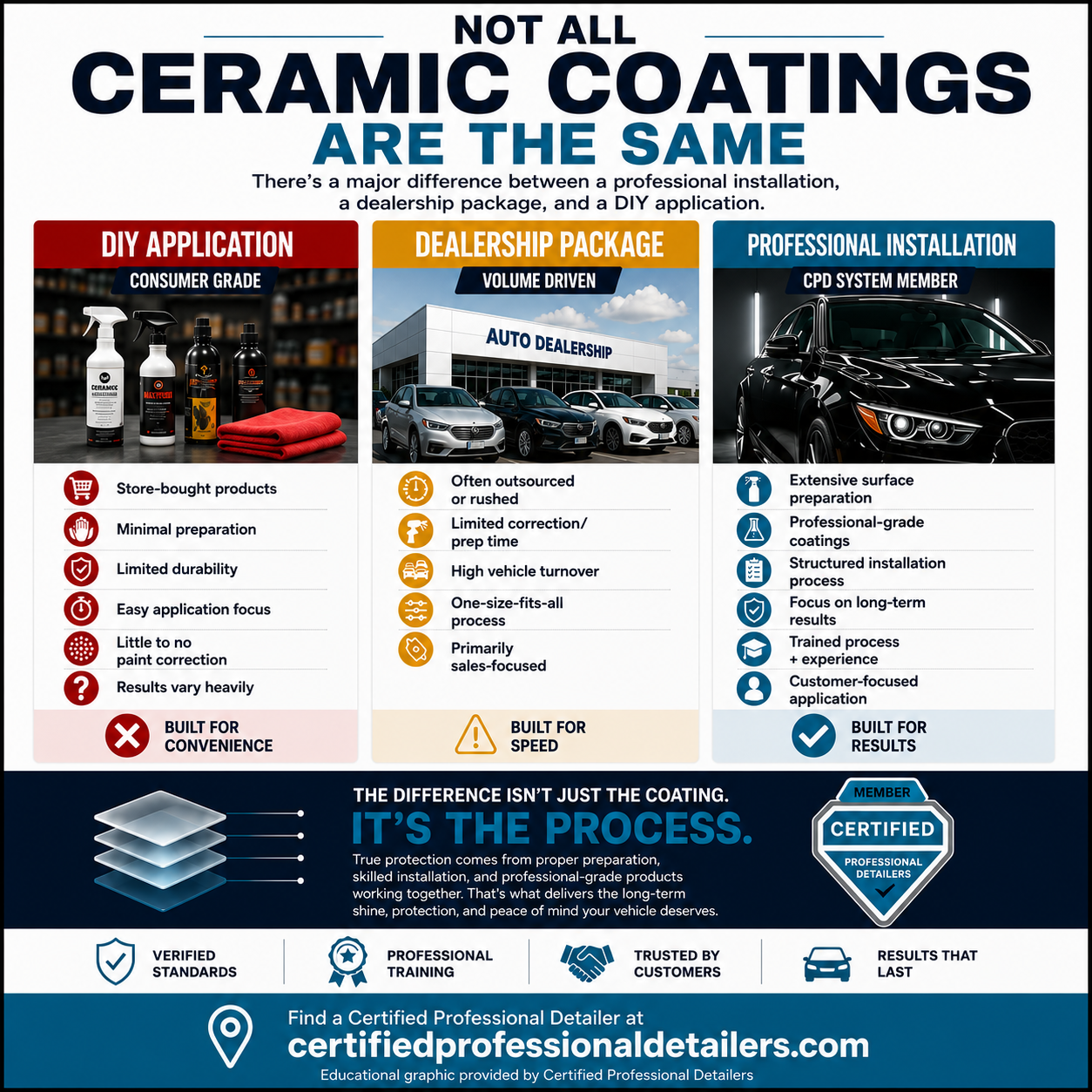
Why pros, better results
Why Professional Installation Matters
Paint correction first: remove swirls, haze, and defects so the coating locks in a clean finish
Full decontamination: chemical and mechanical steps remove iron, tar, and bonded debris that block bonding
Careful degreasing: panel wipe to remove oils and polishing residue before application
Controlled application and inspection: stable temperature, low dust, correct cure time, and final checks on high spots Warranties and transparency
Ask what the warranty covers, what voids it, and what maintenance is required
A good installer shows the prep steps they use, the products applied, and before/after photos under inspection lighting Red flags when choosing an installer
Skips paint inspection or says prep is optional
Gives a price without seeing the vehicle or paint condition
Promises “lifetime” results with no written maintenance plan
Won’t explain the coating brand, cure time, or aftercare Guide reference: See the Prep section for the full step-by-step prep flow and inspection checklist.
Maintain your coating
How To Maintain A Ceramic Coating
Wash using the two-bucket method with a clean wash mitt and grit guards
Avoid automatic brush washes; choose touchless or hand wash only
Use pH-neutral car shampoo; avoid harsh degreasers unless approved for coatings
Rinse often while washing to reduce rubbing dirt across the paint
Remove bird droppings, bug splatter, and sap quickly using a safe coating-friendly cleaner
Dry with a soft microfiber towel or blower to prevent water spots
Inspect monthly for clogged areas; decontaminate only as needed with safe products
Use a coating “topper” or maintenance spray every 2–3 months (or per product label) to maintain water behavior Guide reference: See the Maintenance section for recommended wash tools, approved soaps, and the maintenance product schedule.
Are Ceramic Coatings Worth It? + Find a Certified Professional Detailer
Are Ceramic Coatings Worth It?
Ceramic coatings are usually worth it if you drive often, park outside, live in high-sun or harsh-weather climates, or simply want a cleaner car with less weekly effort. They can also make sense for show cars because they help keep paint looking sharp between details.
To decide, weigh the upfront price against long-term value: fewer waxing steps, easier washes, and better resistance to UV fading and chemical staining. If you want reliable results and a clear care plan, professional installation can be the difference between “pretty good” and “consistently great” outcomes.
Find A Certified Professional Detailer Near You
Ready for next steps. Use the CPD Find A Detailer Map to find a Certified Professional Detailer near you, and bring the guide with you so you can compare options apples-to-apples.
Before you book, ask your installer about prep work, warranty terms, and the maintenance plan they expect you to follow.
Find a CPD Near Me: CPD Find A Detailer Map
Contact a CPD for personalized advice based on your paint condition, driving habits, and budget.
What does ceramic coating do?
How long does ceramic coating last?
Does ceramic coating replace wax?
Can ceramic coatings prevent scratches?
Is ceramic coating worth it?
Can I wash my car after ceramic coating?
Additional Resources